
SEO Reporting Formats A Complete Guide to Tracking and Presenting Your Search Performance
Search engine optimization is only as valuable as your ability to measure and communicate its impact. Whether you’re an in-house marketer, agency professional, or freelance consultant, mastering SEO reporting formats is essential for demonstrating value, securing buy-in, and making data-driven decisions.
Why SEO Reporting Format Matters
The way you present SEO data can make the difference between stakeholders who understand and support your efforts versus those who see SEO as a mysterious black box. A well-structured report transforms raw data into actionable insights, tells a compelling story about performance, and aligns SEO metrics with broader business objectives.
Essential Components of Effective SEO Reports
Regardless of which format you choose, every comprehensive SEO report should include several core elements:
Executive Summary: This high-level overview captures the most critical metrics and insights in a digestible format for busy stakeholders. Focus on business impact rather than technical details, highlighting wins, challenges, and strategic recommendations.
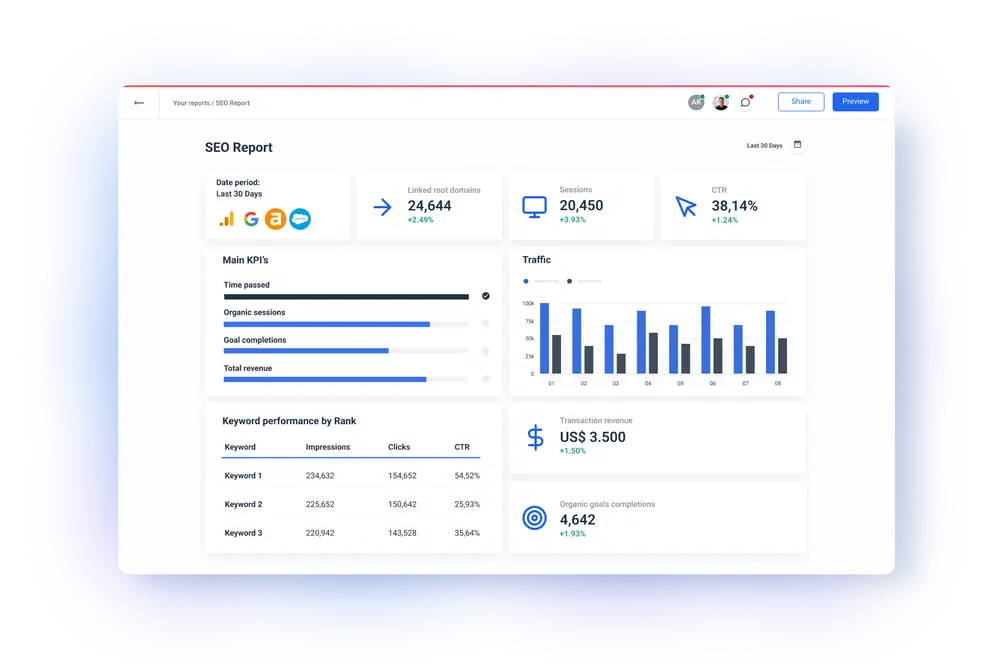
Key Performance Indicators: Your KPIs should align with business goals and might include organic traffic, keyword rankings, conversion rates, revenue from organic search, and domain authority. The specific metrics you track depend on your objectives and industry.
Traffic Analysis: Break down organic search traffic by source, landing pages, geographic location, and device type. This section reveals patterns in how users find and interact with your site.
Keyword Performance: Track rankings for target keywords, showing movement over time and identifying opportunities for improvement. Include both branded and non-branded terms, and segment by search intent where relevant.
Backlink Profile: Monitor the quantity and quality of inbound links, including new links acquired, lost links, and the overall health of your link profile. This helps assess domain authority and competitive positioning.
Technical SEO Health: Report on site speed, mobile usability, crawl errors, indexation status, and Core Web Vitals. These technical factors directly impact search visibility and user experience.
Competitive Analysis: Compare your performance against key competitors for market share visibility, keyword overlap, and backlink profiles. This context helps stakeholders understand your position in the search landscape.
Conversion Metrics: Connect SEO efforts to business outcomes by tracking goal completions, lead generation, e-commerce transactions, or other conversion events from organic traffic.
Popular SEO Reporting Formats
Different situations call for different reporting approaches. Here are the most common formats and when to use each:
Dashboard Reports
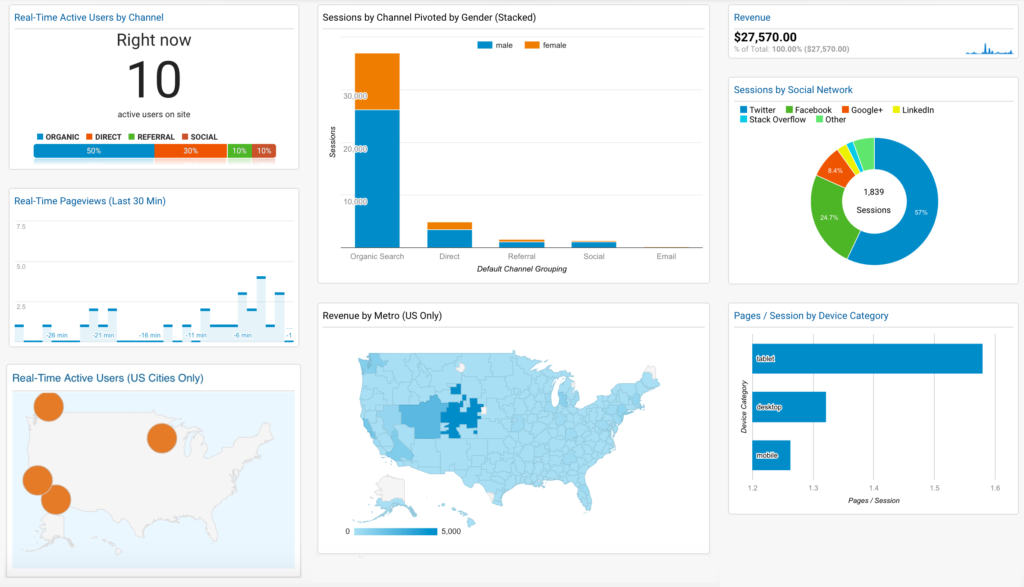
Real-time dashboards provide at-a-glance visibility into current performance. These living documents automatically update with fresh data and work well for stakeholders who want continuous access to metrics. Tools like Google Data Studio, Tableau, and Looker Studio excel at creating interactive dashboards that users can filter and explore themselves. Dashboards are ideal for ongoing monitoring but may lack the narrative context needed for strategic decision-making.
PDF Reports
The traditional PDF report remains popular for formal presentations and client deliverables. These static documents allow for complete control over design, branding, and narrative flow. They’re perfect for monthly or quarterly reviews where you want to provide comprehensive analysis with visual appeal. The downside is that PDFs require manual updates and can’t offer interactivity.
Slide Deck Presentations
PowerPoint or Google Slides presentations work best for live meetings where you’ll walk stakeholders through findings. This format encourages visual storytelling with charts, graphs, and minimal text. Presentations facilitate discussion and questions but may oversimplify complex data for the sake of clarity.
Spreadsheet Reports
Excel or Google Sheets reports appeal to data-savvy audiences who want to dig into the numbers themselves. Spreadsheets can include multiple tabs for different data sets, pivot tables for custom analysis, and formulas for calculations. While less visually appealing, this format offers maximum flexibility and transparency.
Automated Email Reports
Scheduled email summaries deliver key metrics directly to stakeholder inboxes on a regular cadence. These brief updates work well for keeping teams informed without requiring them to log into separate platforms. Email reports should focus on highlights and trends rather than exhaustive detail.
Custom Web Portals
Some organizations build dedicated reporting portals that combine elements of dashboards, reports, and analytics tools. These branded platforms provide clients or internal teams with a centralized hub for all SEO data and insights. While powerful, custom portals require significant development resources.
Tailoring Reports to Your Audience
The best reporting format depends on who’s receiving the information. C-suite executives typically prefer concise executive summaries with high-level business impact. They want to know how SEO contributes to revenue and brand visibility without technical jargon.
Marketing managers and directors benefit from more detailed reports that balance strategic insights with tactical recommendations. They need enough detail to make informed decisions about resource allocation and campaign priorities.
Technical teams and SEO specialists require comprehensive data including granular keyword rankings, technical audit findings, and implementation tracking. These audiences appreciate raw data and can interpret complex metrics without extensive explanation.
Clients at agencies expect professional, branded reports that clearly demonstrate the value of services provided. These reports should emphasize wins, explain challenges, and outline next steps to justify ongoing investment.
Best Practices for SEO Reporting
Creating effective reports goes beyond choosing the right format. Focus on these principles to maximize impact:
Tell a Story: Don’t just present numbers—explain what they mean. Connect data points to create a narrative about performance trends, opportunities, and recommendations.
Visualize Data: Charts, graphs, and heat maps make complex information more digestible. Choose visualization types that best represent your data, whether that’s line charts for trends, bar charts for comparisons, or pie charts for composition.
Set Benchmarks: Provide context by comparing current performance to previous periods, industry standards, or competitor metrics. Progress is most meaningful when measured against clear baselines.
Be Consistent: Use the same metrics, timeframes, and format each reporting period so stakeholders can easily spot changes and trends. Consistency builds trust and familiarity.
Include Recommendations: Every report should end with clear, actionable next steps. What opportunities should you pursue? What challenges need addressing? What resources are required?
Automate Where Possible: Leverage tools and APIs to automatically pull data, reducing manual work and ensuring accuracy. Save human effort for analysis and strategy rather than data collection.
Be Honest: Report both successes and setbacks. Transparency about challenges builds credibility and helps stakeholders understand the realities of SEO, which rarely follows a straight upward trajectory.
Tools for Creating SEO Reports
The right tools can streamline your reporting process significantly. Google Analytics and Google Search Console provide foundational data about traffic and search performance. SEO platforms like SEMrush, Ahrefs, and Moz offer comprehensive analytics, rank tracking, and competitor analysis. Data visualization tools such as Looker Studio and Tableau transform raw data into compelling visuals. Reporting automation platforms like AgencyAnalytics and DashThis can pull data from multiple sources and generate reports automatically.
The Future of SEO Reporting
SEO reporting continues to evolve alongside changes in search algorithms, user behavior, and marketing technology. Modern reports increasingly emphasize user experience metrics, AI-driven insights that surface anomalies and opportunities automatically, and integration with broader marketing analytics for a holistic view of performance. The trend is toward more automated, real-time reporting that reduces manual effort while providing deeper intelligence.
Conclusion
Effective SEO reporting is as much an art as it is a science. The best format for your organization depends on your audience, goals, reporting frequency, and available resources. Whether you choose dashboards for real-time monitoring, PDFs for formal reviews, or custom portals for comprehensive analysis, the key is presenting data in a way that drives understanding and action. By focusing on clear communication, relevant metrics, and actionable insights, your SEO reports become powerful tools for demonstrating value and guiding strategy.

Contact
Info@derbyseo.com
+92 300 1244222
© 2023 Created by derbyseo